
Eagle Mountain, UT
Driveway Concrete Lifting
in Eagle Mountain
A sunken driveway section is more than an eyesore. It can scrape the bottom of your car, create a tripping hazard, and get worse with every winter. We fix it in a single visit without tearing the concrete out.
Why Driveways Sink in Eagle Mountain
Eagle Mountain sits on soils with a significant clay content. This type of soil is highly reactive to moisture changes. During wet seasons it absorbs water and swells. During dry summers it shrinks. Over time, this repeated cycle works its way under your driveway slabs and causes them to lose their support.
Utah winters make this worse. Freezing temperatures lock moisture into the ground and the freeze-thaw cycle can shift soil quickly. Poorly graded lots that send water toward the driveway instead of away from it are especially prone to this kind of settling. Once a void forms under a slab, the concrete has no support, and it drops.
The result is a driveway section that sits lower than the others. You get a lip or step between panels, which can catch car bumpers and create a fall hazard for anyone walking to or from your home.
Lifting Versus Replacing Your Driveway
When homeowners call about a sunken driveway, the conversation usually starts the same way: "Do I need to replace the whole thing?"
In most cases, no. As long as the concrete itself is structurally sound and not heavily fractured, lifting it back into place is a far better option. The existing slab is still perfectly good concrete. It just needs to be where it belongs.
Full driveway replacement typically runs from several hundred to several thousand dollars depending on the square footage. Concrete leveling for the same area often costs 50 to 70 percent less, and the result is the same flat, safe surface.
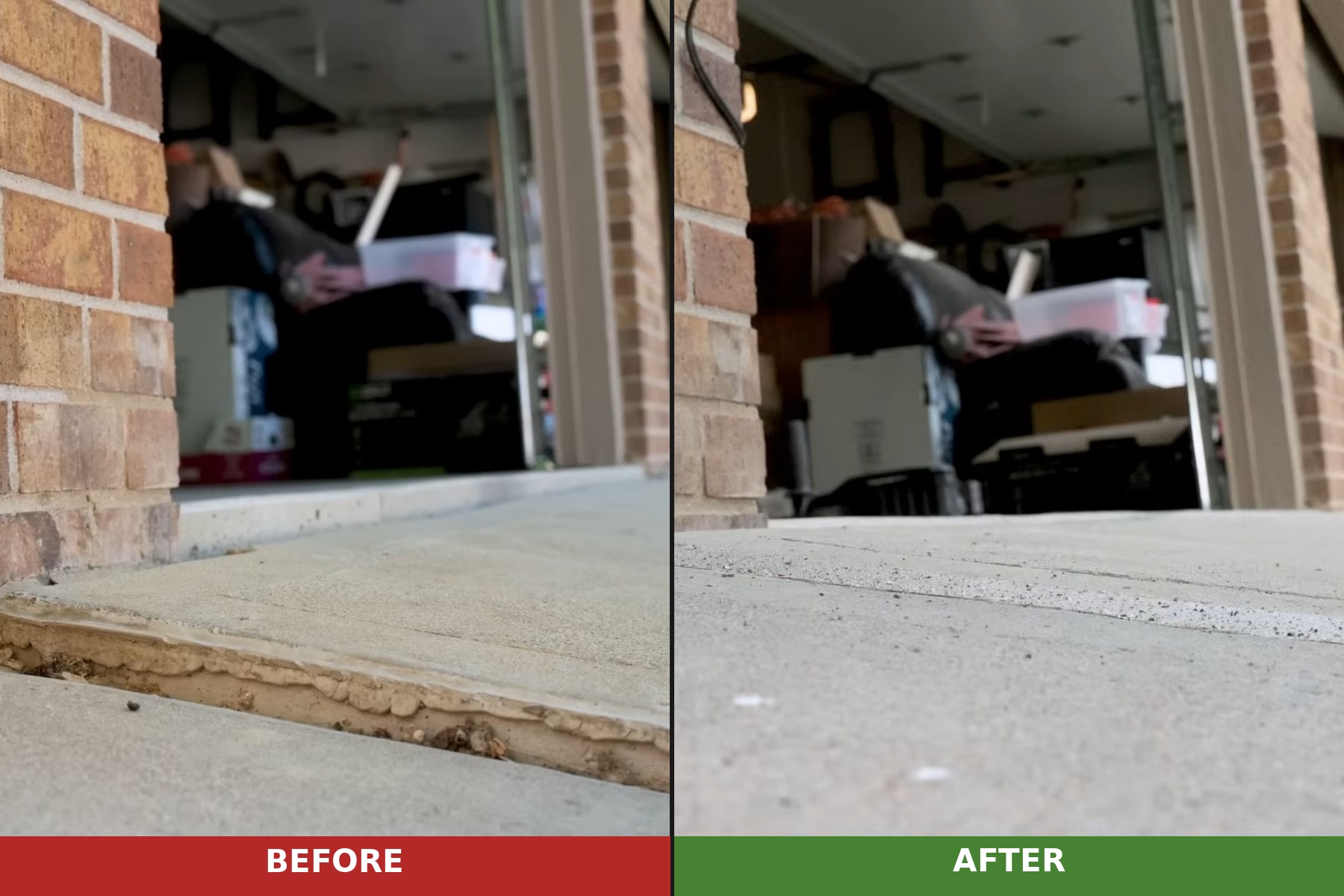
Driveway Lifting at a Glance
- Job typically completed in 1 to 3 hours
- Walk on it the same day in most cases
- 50 to 70 percent less than full replacement
- No demolition or concrete haul-away required
- Small access holes are neatly patched after the lift
- Free estimate, no pressure
What to Expect When We Come Out
-
1
Inspection and Assessment
We walk the driveway with you, identify which slabs have settled, and assess how much lift is needed. We look for any cracks or damage that would affect the outcome and we give you an honest picture of what lifting can and cannot fix.
-
2
Drilling the Access Holes
We drill small holes through the settled slab. These are strategically placed to give us access to the void underneath. The holes are small and will be patched cleanly once the job is done.
-
3
Pumping and Lifting
We pump material through the access holes to fill the void and exert upward pressure on the slab. The concrete rises gradually and we monitor it carefully to land at the right level.
-
4
Patching and Cleanup
Once the slab is level, we patch the access holes with a concrete mix that blends with the surrounding surface. We clean up the site and you are left with a driveway that is flat, safe, and ready to use.
Driveway Lifting Questions
Can all sunken driveways be lifted?
Most can be. If the concrete is in generally good condition and the settlement is due to soil movement beneath the slab, lifting is a great option. If a slab is heavily cracked and broken into many small pieces, replacement may make more sense. We will tell you upfront which situation you are in.
How long will it stay level after lifting?
Results vary based on soil conditions and drainage. Most driveway leveling jobs hold for many years. Improving water drainage away from the slab after the lift will help the results last as long as possible.
When can I park on my driveway again?
We will let you know based on the specific method used. In most cases you can walk on the surface the same day, and drive on it within 24 hours. We will not leave your property without telling you the recommended wait time.
Explore related services and resources: